7 Steps On How To Give a Dog a Proper Bath at Home
The water is running. Your dog plants their feet like concrete. You’re already wet, and the shampoo cap slipped down the drain. Most at-home dog baths go wrong before they start, not because people don’t care, but because they skip the basics that actually matter.
A proper dog bath is not about making your dog smell nice. It’s about skin health, coat balance, and stress control. Do it right and your dog feels better for weeks. Do it wrong and you invite itching, dandruff, hot spots, and a dog that hides when you say bath.
Let’s fix that.
Why a “quick rinse” is usually the problem
Dogs are not small humans. Their skin is thinner, their pH is different, and their coats trap debris close to the skin. Human shampoo strips protective oils. Dish soap dries skin. Even many cheap dog shampoos overclean and leave residue.
Veterinary dermatology research consistently shows that improper bathing disrupts the skin barrier, increasing moisture loss and inflammation. That’s why dogs start scratching days after a bad bath, not immediately.
A proper bath protects the skin first. Clean fur is a side effect.
What you need before the water turns on
Preparation matters more than technique. Gather everything first so you’re not chasing bottles while your dog shakes water everywhere.
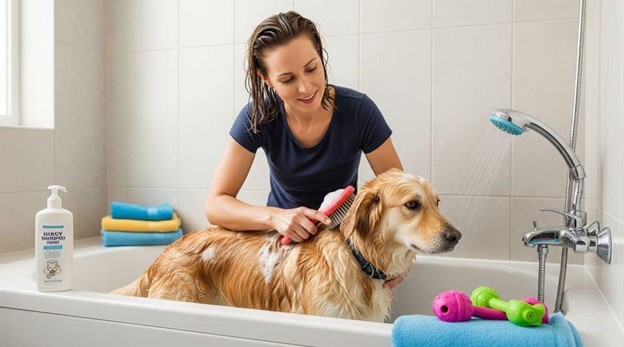
Practical checklist
- Dog-specific shampoo matches coat and skin needs
- Dog conditioner to restore lipids and reduce static
- Non-slip mat for the tub or shower
- Lukewarm water, never hot
- Soft towel, microfiber if possible
- Brush or deshedding tool
- Cotton balls for ears
- Treats for calm behavior reinforcement
Using a balanced dog shampoo and conditioner from a grooming-focused supplier like Effective Pet Products helps maintain the natural skin barrier instead of stripping it.
Step 1: Brush before bathing (this is not optional)
Dry brushing removes loose hair, dirt, and mats. Water tightens tangles. If you skip this step, you trap debris against the skin and make rinsing harder.
Short-coat dogs need a rubber brush or soft bristle brush. Double-coat breeds benefit from an undercoat rake. Long coats need gentle detangling with fingers first, then a slicker.
Two minutes of brushing can save ten minutes of rinsing.
Step 2: Control the environment, not the dog
Most dogs hate baths because they feel unstable and trapped. Fix the setup.
- Place a non-slip mat under their feet
- Keep water pressure low
- Use calm, steady movements
- Speak normally, not in baby talk
Bath stress drops significantly when dogs feel secure underfoot. This is the same principle trainers use in structured handling during personal dog training sessions, where predictability reduces anxiety.
Step 3: Wet the coat thoroughly
This sounds obvious. It’s not.
Water must reach the skin, not just the topcoat. Dense coats repel water. Start at the shoulders and work backward. Avoid spraying the face directly.
If water beads up, keep going. Shampoo on a dry undercoat does not clean. It just spreads.
Step 4: Shampoo correctly, not generously
More shampoo does not equal cleaner. It equals residue.
- Dilute shampoo with water if recommended
- Massage gently with fingertips, not nails
- Focus on high-oil zones: neck, chest, hindquarters
- Avoid eyes, nose, and inside ears
Dog shampoos designed for grooming, like those found on the Effective Pet Products dog shampoo and conditioner grooming page, are formulated to clean without stripping essential oils. That balance matters more than scent.
Let the shampoo sit for 2 to 3 minutes unless directions say otherwise. That contact time allows surfactants to lift dirt and microbes safely.
Step 5: Rinse longer than you think
Leftover shampoo is one of the top causes of post-bath itching.
Rinse until you think you’re done. Then rinse again.
Check armpits, groin, under the collar area, and behind ears. These spots trap residue.
Clear water running off the coat is your signal to move on.
Step 6: Condition the coat for skin health
The conditioner is not cosmetic. It restores lipids, improves moisture retention, and reduces breakage.
Apply dog conditioner mainly to the coat length, not directly onto the face. Leave it on for the recommended time, then rinse thoroughly.
Conditioning is especially important for:
- Dogs with dry or flaky skin
- Long or curly coats
- Dogs bathed more than once a month
Skipping conditioner is like washing your hands repeatedly without lotion.
Step 7: Drying without damage
Lorem ipsum dolor sit amet,
Rubbing aggressively causes tangles and breakage. Instead:
- Gently squeeze water from the coat
- Pat dry with a towel
- Use a low-heat dryer only if your dog tolerates it
Never use high heat. Dog skin burns faster than human skin.
For anxious dogs, towel drying in stages with breaks works better than forcing a full dry in one go.
How often should you bathe your dog?
This depends on coat type, lifestyle, and skin condition.
General guideline based on veterinary dermatology:
- Short coats: every 4 to 8 weeks
- Double coats: every 6 to 12 weeks
- Long or curly coats: every 3 to 6 weeks
More frequent bathing requires high-quality shampoo and conditioner designed for regular use, not harsh degreasers.
Common mistakes that cause skin problems
Case example
A client bathed their Labrador weekly using a flea shampoo meant for occasional use. Within a month, the dog developed dry patches and constant scratching. Switching to a gentle grooming shampoo and adding conditioner resolved symptoms within two weeks.
Avoid these errors
- Using human shampoo
- Bathing too often with harsh formulas
- Skipping conditioner
- Incomplete rinsing
- Forcing baths when the dog is already stressed
A note for veterinarians and clinical professionals
For veterinarians, bathing is often dismissed as a grooming issue rather than a medical one. In practice, it sits right at the intersection of dermatology, behavior, and preventive care. Skin barrier damage caused by improper bathing is a frequent underlying factor in pruritus cases that show up weeks later with no obvious trigger.
Clinically, recommending correct at-home bathing protocols can reduce repeat visits for secondary infections, reduce reliance on medicated shampoos, and improve owner compliance. Dogs bathed with pH-balanced shampoos and appropriate conditioners show better epidermal hydration and lower transepidermal water loss compared to dogs washed with degreasing or human products, according to veterinary dermatology literature.
For professionals exploring veterinary jobs in small animal practice, dermatology, or client education roles, teaching owners how to bathe correctly is a low-effort, high-impact intervention. It empowers owners, supports long-term skin health, and reinforces the veterinarian’s role beyond prescriptions.
Conclusion:
A proper bath done at home can quietly improve your dog’s quality of life. Healthy skin regulates temperature better, resists infection, and keeps the coat comfortable instead of itchy or brittle. When you use the right shampoo and conditioner, rinse thoroughly, and keep the experience calm, you’re supporting your dog’s biology, not fighting it.
That’s why dogs who are bathed correctly often need fewer baths over time. Their skin stays balanced, and their coat stays cleaner naturally.
The real win is not a dog that smells good for a day. It’s a dog that feels good for weeks. Once you understand how your dog’s skin works and adjust your routine accordingly, bath time stops being a struggle and becomes just another part of responsible care. Small changes in how you bathe can prevent long-term skin issues and make grooming easier for both of you.